
LIMBO
PlaydeadAdventure
4.43.96K Reviews
- Version
- 1.27
- Installs
- 1.00M
- Age Rating
- Teen
Screenshots




Our Review of LIMBO
 Analysis by Appyee
I think LIMBO is best understood through one central idea: it trusts you to learn by looking. Rather than stopping to explain what each object does, the game lets you read the scene, try an action, and notice what changes. That approach makes exploration feel active, but it also means progress depends on patience and observation more than on collecting instructions.
Learning the rules by watching the world
In many adventure games, I expect a character to explain the next goal or a marker to point me toward it. Here, the environment does that work. A ledge, a rope, a movable object, or a suspicious patch of ground can suggest a possibility, but rarely spells out the answer. I found myself scanning the space before moving, then testing one idea at a time. When the solution clicks, it feels earned because I made the connection rather than followed a prompt.
This is also why a small change in the scene can matter. A mechanism that seemed decorative may become relevant once I see how it affects something nearby. I learned to pause after reaching a new area, look for hazards and usable objects, and consider whether the scenery is showing me a route or warning me away from one. Careful observation is the game’s most useful tool, especially when a puzzle initially looks like a reflex challenge.
A practical way to handle a difficult stretch
When I got stuck, repeating the same jump faster usually did not help. I made more progress by changing one part of my approach: watching the timing of a hazard, checking whether an object could be moved, or trying to understand what a failed attempt had revealed. The game can be unforgiving about mistakes, so treating each one as information makes a frustrating moment easier to manage. If I was no longer thinking clearly, a short break was often more useful than rushing through another attempt.
That makes the game easier to fit into a quiet evening than into a distracted few minutes between messages. A brief play session can still work, but I would stop at a natural pause and remember the last obstacle I was testing. The puzzles reward attention, and returning with a clear head is more satisfying than trying to force a solution while half-focused.
Where it fits among adventure games
As an adventure game from Playdead, it takes a very different route from a sprawling quest built around maps, dialogue, and a long list of objectives. Its black-and-white presentation and sparse storytelling make the surroundings carry much of the mood and direction. If I want a compact-feeling, focused journey where solving the next environmental problem is the main activity, this is a stronger match than an open-world game or a dialogue-heavy adventure.
The trade-off is that players who want frequent explanations, an obvious narrative, or a broad set of activities may find the experience too restrained. The puzzles also ask for trial and error, and a wrong guess can interrupt the flow. I would not choose it when I want a cheerful, low-pressure distraction: the setting is unsettling, and the danger is part of its identity rather than a minor detail.
Who will get the most from it
I’d recommend it to someone who enjoys interpreting a space, testing a hunch, and sitting with a strange atmosphere instead of being guided from one objective to the next. It can also suit a player looking for a game to focus on alone, since its quiet presentation encourages attention to small visual and sound cues. The Teen age rating is worth keeping in mind for younger players and families deciding whether its dark tone is a comfortable fit.
If you prefer forgiving puzzles or want to play while multitasking, I’d look for a more relaxed alternative. This one is more rewarding when I give it my attention, and less enjoyable when I expect every challenge to explain itself. The current version is 1.23, and the game costs $3.99, so I’d approach it as a paid, focused experience rather than an endless activity to dip into for new content.
First Impressions: A World of Shadows
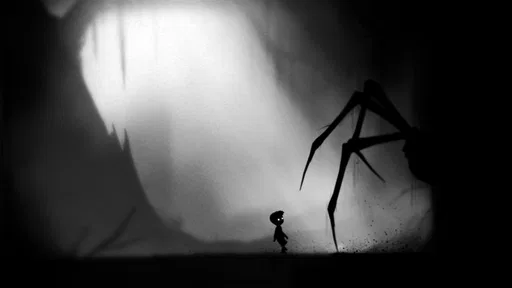
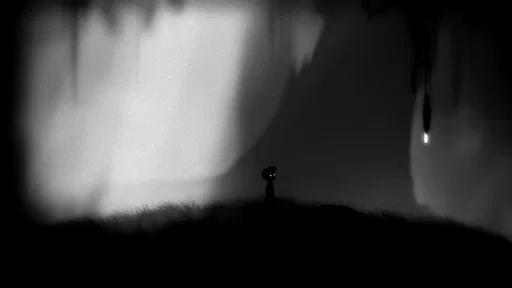
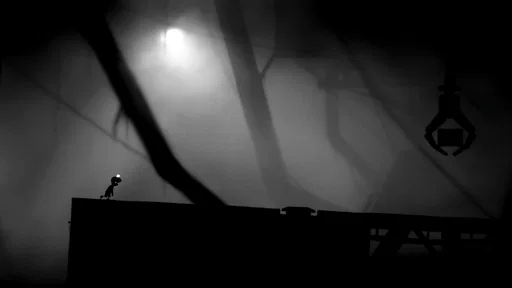
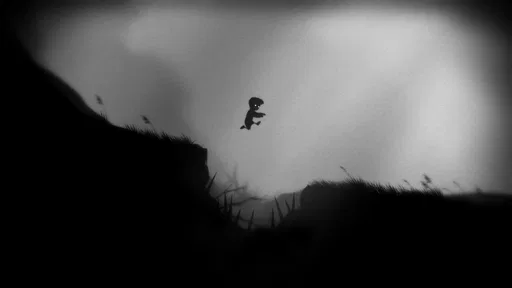
When I first opened LIMBO, I wasn't quite sure what to expect. The game kicks off with a monochrome aesthetic that's stark and haunting. It's like stepping into a silent film, with no dialogue or text to guide you. You're left alone with your thoughts and a little boy protagonist navigating a dark, mysterious landscape. The visuals are stunning in their simplicity, and it's this minimalist design that really pulls you in. You get a sense of isolation, but it’s intriguing rather than off-putting.
Gameplay Mechanics: Simple Yet Challenging
At its core, LIMBO is a puzzle-platformer. The controls are straightforward, which is a blessing because the puzzles themselves can be mind-bending. You move the boy through the environment, dodging traps, leaping over chasms, and solving puzzles that require a mix of timing, precision, and lateral thinking. The beauty of this game is in its design; each puzzle feels like a natural extension of the environment, making the world seem alive in its own dark way.
The learning curve is gentle at first, allowing you to get a feel for the controls. But don't be fooled; the game ramps up the difficulty in a way that keeps you engaged but occasionally leaves you scratching your head. It’s a satisfying challenge, though, and when you finally solve a particularly tricky puzzle, you can't help but feel a surge of accomplishment.
Sound Design: Eerie and Atmospheric
One of the standout features of LIMBO is its sound design. The absence of a musical score amplifies the tension, leaving you attuned to every creak, splash, and distant rumble. It’s all about atmosphere here, and the game excels at immersing you in its world. The sound of the boy’s footsteps, the rustle of leaves, or the unsettling buzz of flies adds layers to the experience. It's amazing how these subtle audio cues can enhance the feeling of being in a living, breathing world.
Storytelling: Open to Interpretation
What I found fascinating about LIMBO is its storytelling approach. There's no explicit narrative laid out for you. Instead, you're invited to piece together the story through the environment and your own imagination. This open-ended narrative allows the game to be deeply personal, as each player might interpret the journey differently. It’s a bold move by the developers, but it pays off by making the experience uniquely yours.
The Overall Experience: A Haunting Journey
So, what's the verdict on LIMBO? It's a game that sticks with you long after you've put it down. Its combination of visual storytelling, challenging puzzles, and atmospheric sound design creates a hauntingly beautiful experience. It's not just about playing a game; it's about stepping into another world and feeling its quiet power.
If you're looking for a game that offers more than just entertainment, LIMBO is a journey worth taking. It's a reminder that sometimes, the most powerful stories are those left unsaid, lurking in the shadows, waiting for you to find them.
A small-screen session that suits its pace
On a phone, I’d choose a calm moment rather than try to squeeze the game into a noisy commute or a queue. Its visual clues are easy to miss when attention is split, and the hush of the sound design is part of how it builds tension. A pair of headphones can help me catch those details, while playing somewhere quiet makes the pauses between actions feel intentional instead of empty.
For a realistic evening routine, I might play after dinner, work through one section, then put the phone down when I reach a point that feels like a clean stopping place. That is a more natural fit than treating it like a daily checklist. There is no need to race; taking a moment to inspect a room can save repeated failed attempts, and the slower pace is part of the appeal.
What to expect from the challenge and tone
One question I would ask before starting is whether the game is suitable for a younger player. Its Teen rating and grim atmosphere give families a useful reason to preview the tone together. The monochrome look may seem restrained, but the danger and unsettling imagery are central to the experience. I would not pick it as a light bedtime game for someone who is easily disturbed, even though it avoids relying on constant dialogue to make its world feel tense.
Another practical question is whether it is approachable for someone new to puzzle-platformers. I think it is, provided that player is comfortable experimenting. The controls are simple enough to understand, while the challenge comes from working out what the scene is asking you to notice. It is less suitable for anyone who expects a hint system to step in quickly or dislikes repeating a section after a mistake.
Why its restraint works—and when it doesn’t
The game’s minimalism is more than a visual choice: it keeps attention on movement, silhouettes, and the relationship between objects. Compared with adventure games that rely on dialogue trees, inventory management, or a large map, this is a much narrower experience. I see that focus as a strength when I want a concentrated sequence of environmental puzzles, but a limitation if I’m looking for character conversations, optional errands, or a world to roam freely.
Its trial-and-error moments can be a genuine friction point. A puzzle may ask me to infer the intended action, and a mistake can mean repeating part of the approach. Rather than assume every obstacle has a clever hidden trick, I try the simplest physical possibility first and pay attention to what the scene changes after each attempt. That habit keeps the challenge thoughtful without pretending the game is always gentle.
A paid game for a particular kind of attention
The game has a 4.4 average from around 82,000 ratings, with more than a million installs, which suggests it has reached a broad audience without making its quiet style universal. I’d treat that popularity as a reason to consider it, not as proof that it will suit every mood. At $3.99, I would buy it for the focused, authored journey and its distinctive atmosphere, not for ongoing updates or a sprawling set of modes.
It was released on February 11, 2015, and the listed minimum operating system is Android 6.0. Those details make it easier to judge basic device compatibility, but I’d still check that my own device meets the current store requirements before buying. The Teen rating also matters if I’m choosing it for someone else. These are small checks, yet they help avoid the disappointment of purchasing a game that does not fit the device or the player.
The kind of adventure I’d choose it for
What remains distinctive to me is the way the game turns uncertainty into its main form of direction. I am not chasing a marker or following a conversation; I am looking at a dark space and deciding what might be safe, useful, or dangerous. That makes each solved obstacle feel personal, while the sparse narrative leaves room for my own interpretation instead of closing every question.
Playdead’s adventure is a strong choice when I want a compact, eerie puzzle journey and can give it my full attention. It is not the right pick for nonstop action, a cheerful mood, or explicit explanations, and the occasional trial-and-error stretch may test my patience. But if the idea of reading a shadowy environment and piecing together a wordless journey sounds appealing, I’d gladly recommend giving it a careful, uninterrupted try.
Verdict
Strengths of LIMBO
- Stunning monochrome graphics enhance the eerie atmosphere.
- Engaging puzzles that challenge without frustrating.
- Smooth controls make navigation intuitive and seamless.
- Immersive sound design that complements the eerie visuals.
- Short playtime is perfect for quick gaming sessions.
Limitations of LIMBO
- Lack of a clear storyline may confuse some players.
- No hints can make certain puzzles feel overwhelming.
- Limited replayability once the game is completed.
- Might be too short for players seeking longer gameplay.
- Dark visuals may strain eyes during prolonged play.
Similar Picks in This Category
View All
Roblox
Roblox Corporation4.2

Pokémon GO
Niantic, Inc.3.5

Ninja warrior: legend of adven
TOH Games4.6

Ninja Arashi
Black Panther4.6

Eyes - The Horror Game
Fearless Games sp. j.4.5

Critical Action:Gun Strike Ops
FPS Shooter & Action Game4.3
Frequently Asked Questions
What is LIMBO about?
LIMBO is a captivating puzzle-platformer game by Playdead. It follows the journey of a nameless boy who enters a mysterious world in search of his sister. The game's unique visual style features a haunting black-and-white aesthetic, creating a chilling and immersive atmosphere. With its intriguing puzzles and minimalistic storytelling, LIMBO offers a memorable gaming experience.
Is LIMBO suitable for all ages?
LIMBO is best suited for players aged 12 and up due to its dark themes and occasional unsettling imagery. The game involves navigating through dangerous environments and encountering eerie creatures, which may not be appropriate for younger children. Parents should consider the game's mature tone before allowing younger audiences to play.
What platforms can I play LIMBO on?
LIMBO is available on multiple platforms, including Android and iOS devices, as well as PC, Xbox, PlayStation, and Nintendo Switch. This makes it accessible to a wide range of players, whether they prefer mobile gaming on the go or a more traditional console experience at home.
How challenging is LIMBO?
LIMBO presents a moderate level of difficulty, combining platforming with puzzle-solving elements. Players will need to think critically to overcome environmental obstacles and avoid traps. While the game can be challenging, it provides a rewarding experience for those who enjoy solving intricate puzzles and exploring atmospheric worlds.
Does LIMBO require an internet connection to play?
No, LIMBO does not require an internet connection once it has been downloaded. This makes it an excellent choice for offline play, allowing players to enjoy the game anywhere without worrying about connectivity issues. It’s perfect for travel or situations where internet access may be limited.
Play our best games!


